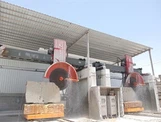
What Is Slab Polish Machine
A slab polishing machine is an industrial piece of equipment used for finishing the surfaces of stone slabs, such as marble, granite, or limestone. It typically consists of a large, flat table where the slabs are placed and moved against progressively finer abrasive pads under high pressure. The machine automates the polishing process, ensuring uniformity and a high-gloss finish on the slabs. It is an essential tool in the stone processing industry for achieving a smooth, reflective surface on stone products intended for flooring, countertops, and other decorative uses.
Advantages of Slab Polish Machine
Enhanced surface quality
One of the primary advantages of slab polishing machines is their ability to produce a smooth and glossy finish on stone slabs. The high-speed rotating pads equipped with fine-grit diamond segments or abrasive materials effectively remove scratches, imperfections, and inconsistencies, resulting in a uniformly polished surface. This not only improves the aesthetic appeal of the slab but also enhances its durability by reducing porosity and increasing resistance to stains and spills.
Increased efficiency
Slab polishing machines are designed to handle large volumes of material quickly and efficiently. They can process slabs of various thicknesses and sizes, making them ideal for both small-scale projects and large-scale production runs. The use of automated feed systems and programmable controls allows operators to set precise parameters for cutting and polishing, ensuring consistent results while reducing manual labor and downtime.
Versatility
Slab polishing machines are highly versatile tools that can be used on a wide range of materials, including granite, marble, limestone, quartz, and concrete. This versatility makes them a valuable asset in any workshop or factory where multiple types of stone are processed. Additionally, many machines come with interchangeable heads and attachments that allow operators to perform a variety of finishing tasks, such as edge profiling, beveling, and texturing.
Cost-effectiveness
While the initial investment in a slab polishing machine, the long-term cost benefits are considerable. The machines are designed to operate efficiently, consuming less energy and requiring fewer repairs than older models. Furthermore, the precision and consistency of the finished product reduce waste and rework, leading to lower material costs and improved profit margins.
Improved safety
Manually polishing stone slabs can be dangerous and time-consuming work. Slab polishing machines automate the process, reducing the risk of injuries and accidents. The machines are equipped with safety features such as emergency stop buttons, protective guards, and automatic shut-offs to ensure the safety of operators and bystanders.
Consistent results
The use of slab polishing machines ensures consistent results across all slabs processed. The precision of the machines allows operators to achieve the same level of polish on every slab, regardless of size or thickness. This consistency is crucial in maintaining quality control and ensuring customer satisfaction.


Why Choose Us
Advanced equipment
A machine, tool or instrument designed with advanced technology and functionality to perform highly specific tasks with greater precision, efficiency and reliability.
High quality
Our products are manufactured or executed to a very high standard, using the finest materials and manufacturing processes.
Professional team
Our professional team collaborates and communicates effectively with each other, and is dedicated to delivering high quality results. We are capable of handling complex challenges and projects that require our specialized expertise and experience.
Customized services
We understand that each customer has unique manufacturing needs. That's why we offer customization options to cater to your specific requirements.
One-stop solution
At our manufacturing facilities, we provide a complete package that includes everything required to get you started, including training, installation and support.
24H online service
We try and respond to all concerns within 24 hours and our teams are always at your disposal in case of any emergencies.
Types of Slab Polish Machine
These are perhaps the most traditional and widely used type of polishing machines. They feature a large, flat bed where the slabs are laid horizontally. The bed moves the slab back and forth or rotates it while attached abrasive pads or discs apply pressure and grind away the surface material to achieve a polished finish. Flatbed polishers can range from small, manual units to large, automated systems capable of handling very large slabs.
Planetary polishers have a set of two or more heads that orbit a central point, similar to planets around the sun. This motion allows for a more aggressive and even polishing action, making them suitable for thicker or denser materials. Planetary polishers are particularly useful for restoring the polish on existing surfaces or achieving a high-gloss finish on new slabs.
Unlike flatbed polishers, profile polishers are designed to work on slabs with curved or irregular surfaces. They can adapt to the contours of the material, providing a consistent finish across uneven surfaces. Profile polishers are commonly used for polishing edges, steps, and other non-flat features in stonework.
These machines use a robotic arm mounted on a bridge-like structure that moves over the slab. The robotic arm holds the polishing head, which applies pressure and abrasives to the surface. Automated bridge polishers are highly efficient and can produce a uniform finish on large batches of slabs with minimal human intervention.
For smaller jobs or when working with intricate designs, handheld polishing machines offer portability and precision. They are typically battery-operated and can be maneuvered easily to reach tight spaces or detailed areas that larger machines cannot access.
Dry polishing machines do not use water and are often used for harder stones that are less susceptible to heat damage. They tend to be faster than wet polishers but may require more frequent cooling breaks to prevent overheating.
These machines combine the capabilities of bridge polishers with gantry systems, enabling them to work on both flat and vertical surfaces. They are highly versatile and can be used in various applications, from polishing large slabs to detailing architectural elements.
Dry polishing machines do not use water and are often used for harder stones that are less susceptible to heat damage. They tend to be faster than wet polishers but may require more frequent cooling breaks to prevent overheating.
How to Store Slab Polish Machine


Clean the machine:Before storing the slab polisher, thoroughly clean the machine. This involves removing all abrasive residue, dust, and debris. Use compressed air or a soft brush to clean the abrasive pads, the machine's body, and the wheels or tracks. If the machine has a water reservoir, empty and clean it as well to prevent the growth of mold or bacteria.
Inspect for damage:After cleaning, inspect the machine for any signs of damage. Look for cracks, dents, or unusual wear on the machine's body, motor, and components. Check the power cords for fraying or damage. If any issues are found, repair or replace the affected parts before storing the machine.
Lubricate moving parts:To prevent rust and ensure smooth operation when the machine is next used, lubricate all moving parts. This includes the bearings, gears, and any other components that require lubrication according to the manufacturer's recommendations.
Disconnect power:Unplug the machine from its power source to prevent electrical accidents. If the machine is cordless, store the battery separately according to the manufacturer's guidelines.
Secure loose parts:Remove any loose accessories or tools that came with the machine, such as wrenches, brushes, or extra abrasive pads. Store these items in their designated cases or containers to keep them organized and prevent loss.
Cover the machine:To protect the machine from dust, moisture, and other environmental factors, cover it with a suitable protective cover. The cover should be breathable to prevent condensation and should fit snugly over the machine without restricting air circulation.
Choose an appropriate storage location:Select a storage location that is dry, clean, and free from extreme temperatures. Avoid storing the machine near windows, doors, or vents where it could be exposed to direct sunlight, drafts, or moisture. If possible, store the machine in a dedicated space or on a sturdy shelf or rack to keep it off the ground and prevent accidental damage.
Regular maintenance:Even when not in use, regular maintenance is essential to keep your slab polishing machine in top condition. Check the machine periodically for any signs of wear or damage and address any issues promptly. Following the manufacturer's recommended maintenance schedule will help ensure that your machine is ready for use when needed.
Application of Slab Polish Machine
Stone fabrication: In the stone industry, slab polishing machines are used to enhance the natural beauty of marble, granite, limestone, and other types of stone. After cutting and shaping the stone slabs, polishing machines are employed to smooth out the surface and bring out the stone's inherent color and texture. The final product can be used for countertops, flooring, tiles, and decorative accents.
Concrete finishing: In construction, slab polishing machines are utilized to create a high-gloss finish on concrete surfaces. Polished concrete is durable, low-maintenance, and aesthetically pleasing, making it a popular choice for commercial and residential floors. The process involves grinding down the concrete surface to reveal the aggregate beneath and then polishing it to a desired sheen level.
Metal processing: For metals like stainless steel, aluminum, and copper, slab polishing machines are used to remove oxidation, scratches, and other blemishes. This results in a reflective and uniform finish that is often required for aesthetic purposes or functional reasons, such as improving corrosion resistance.
Glass manufacturing: In the glass industry, polishing machines are used to smooth and refine the edges and surfaces of glass products. This is crucial for safety and aesthetics, especially in applications where the glass will be handled or displayed.
Artistic applications: Artists and craftspeople use slab polishing machines to add a finishing touch to their sculptures and artwork. Whether working with stone, metal, or glass, the ability to create a smooth and shiny surface enhances the visual appeal and tactile quality of the artwork.
Restoration and renovation: Historical buildings and monuments often require the expertise of slab polishing machines to restore their original luster. These machines can be used to carefully remove years of dirt, grime, and weathering without damaging the underlying material.
Industrial production: In manufacturing, slab polishing machines are integrated into production lines to efficiently process large quantities of materials. By automating the polishing process, manufacturers can maintain consistent quality standards and increase productivity.

Precautions When Using Slab Polish Machine
Machine familiarity
Before operating the machine, read the manufacturer's manual thoroughly to understand all the features, controls, and safety mechanisms. Familiarize yourself with the emergency stop function and how to quickly shut down the machine in case of an emergency.
Work area preparation
Clear the area around the machine of any debris, tools, or other materials that could pose a tripping hazard. Ensure there is ample space to move the machine without obstruction. If working with wet polishing, make sure the floor is equipped with proper drainage or mats to prevent slipping.
Machine inspection
Inspect the machine before each use to ensure that all components are in good condition. Look for any signs of wear, damage, or loose parts, especially checking the abrasive pads for integrity. Ensure that the power cord is intact and free of damage.
Proper setup
Make sure the machine is securely placed on a level surface. If the machine has adjustable settings, set them according to the type and thickness of the stone slab you are working on. For wet polishing, set up the water supply correctly to maintain an even flow over the abrasive pad.
Material handling
Handle the stone slabs carefully to avoid chipping or cracking. Use clamps or fixtures if necessary to hold the slab firmly in place during the polishing process.
Operational technique
Start with a coarser grit abrasive pad to remove major imperfections and gradually switch to finer grits for a smoother finish. Apply even pressure and keep the machine moving at a consistent speed to prevent gouging or burning the stone. Avoid applying excess force, as this can cause the machine to vibrate or jump, leading to accidents.
Maintenance and cleaning
After use, turn off the machine and unplug it before performing any maintenance. Clean the abrasive pads and the machine's body to remove any residue. Check for any damage that may need repair or replacement. Proper maintenance helps extend the life of the machine and ensures safe operation.
Emergency procedures
Know what to do in case of an emergency. Have a clear path to an emergency exit and be familiar with first aid procedures. In the event of a malfunction or accident, use the emergency stop button and follow the manufacturer's guidelines for troubleshooting and reporting incidents.
How Do I Choose the Right Slab Polish Machine
Material type and thickness
Different materials require different types of polishing machines. For instance, marble and granite slabs might need a more powerful machine compared to softer stones like limestone. Additionally, the thickness of the slab will influence the size and power requirement of the machine. Ensure the machine can handle the type and thickness of the material you intend to polish.
Polishing requirements
Determine the level of polish you need. Some machines are designed for light polishing, while others can provide a high-gloss finish. Consider the final use of the slab; for example, a kitchen countertop would require a higher-quality finish than a simple walkway.
Machine size and mobility
The size of the machine should correspond to the size of the slab you are working with. Larger machines are better suited for bigger projects, but they can also be more challenging to maneuver. If you plan to move the machine frequently, consider a more compact and portable model.
Power source
Slab polishing machines can be powered by electricity or compressed air. Electric machines are typically more common and offer a range of power options. Air-powered machines are usually more powerful but require an air compressor.
Abrasive system
Different machines use varying abrasive systems. Some machines use interchangeable discs, while others have a built-in abrasive wheel. Consider how easy it is to change and replace the abrasive discs or wheels, as well as the availability of replacement parts.
Speed and control
The speed of the machine affects the efficiency of the polishing process and the quality of the finish. Look for a machine with variable speed control to adjust the speed according to the material and desired outcome.
Safety features
Safety features are critical when operating heavy machinery. Ensure the machine has an emergency stop button, a stable base, and guards to protect the user from potential hazards.
Additional features
Additional features such as water cooling, dust extraction, and vibration reduction can improve the performance and comfort of the machine. Consider which features are important for your specific application.
Production Methods of Slab Polish Machine
Dry polishing
Dry polishing is a method that uses abrasive pads or discs without the application of water or lubricants. It is commonly employed for materials that are sensitive to moisture or when the use of water is impractical. The abrasive pads are progressively replaced with finer grits as the polishing proceeds, resulting in a smooth finish.
Wet polishing
Wet polishing is a more prevalent method as it reduces friction and heat buildup, which can lead to material damage or warping. Water is applied either through a spray system or by submerging the slab in a tank. As the machine operates, the water cools the abrasive pad and washes away the grinding dust, preventing scratches and promoting a cleaner finish.
Abrasive blasting
This method involves propelling an abrasive substance at high velocity onto the surface of the slab to remove imperfections and prepare it for polishing. Abrasive blasting can be dry or wet, with the latter being preferred for its dust suppression benefits.
Grinding and honing
Initially, the slab is ground using a coarse-grit abrasive to remove significant irregularities. Once the surface is flat, honing follows with finer grits to create a smoother finish. This step is critical before moving on to polishing, ensuring the surface is ready for the higher demands of the polishing process.
Polishing
The final phase of production involves using progressively finer abrasive pads until the desired sheen is achieved. Polishing compounds may also be applied to enhance the luster and depth of the finish. The speed of the polishing machine and the pressure applied are carefully controlled to prevent overheating and ensure an even finish.
Automated feed systems
In industrial settings, slab polishing machines may be integrated with automated feed systems that transport the slab through the polishing process. This method increases efficiency and consistency, as the machine can handle a continuous stream of material.
Cnc machining
Computer numerical control (cnc) technology is often used in conjunction with slab polishing machines to achieve precise cuts and shapes before polishing. Cnc-controlled machines can perform intricate patterns and detailed edging with high accuracy, which is then followed by polishing to complete the piece.
Manual adjustments
Despite advancements in automation, manual adjustments may still be necessary to optimize the polishing process. Skilled operators can make real-time adjustments based on visual inspection of the finish, ensuring the highest quality outcome.
Post-processing
After polishing, the slabs may undergo additional post-processing steps such as sealing, which is particularly common with stone materials to enhance their durability and protect the finish.
What Are the Components of Slab Polish Machine


Base frame:The base frame provides stability and support for the entire machine. It is usually made of heavy-duty steel or another durable material to withstand the weight of the machine and the forces generated during operation.
Motor:The motor is the heart of the machine, providing the power needed to drive the abrasive disc or pad. It typically ranges in horsepower from small, portable units to large, industrial-grade machines. The motor's power output directly influences the machine's speed and efficiency.
Drive system:The drive system transfers the motor's power to the abrasive disc or pad. This is usually achieved through a belt or direct drive mechanism, which allows the operator to adjust the speed of the disc or pad to suit different materials and finishing requirements.
Abrasive disc or pad:The abrasive disc or pad is mounted on the drive system and comes into contact with the slab during polishing. It is made of a resilient material such as rubber or polyurethane and is embedded with abrasive particles that remove material from the slab's surface. The disc or pad is progressively replaced with finer grits as the polishing process advances.
Water cooling system:Many slab polishing machines are equipped with a water cooling system to reduce friction and heat buildup during polishing. This system sprays water onto the abrasive disc or pad and the slab, washing away grinding dust and preventing damage to the material.
Dust collection system:To minimize airborne dust and improve working conditions, many machines are fitted with a dust collection system. This typically consists of a vacuum or blower that draws dust from the polishing area and deposits it into a filter or collection bin.
Control panel:The control panel allows the operator to adjust the machine's settings, such as speed and water flow rate. It may also include safety features such as an emergency stop button and indicator lights to alert the operator to any issues.
Feeder mechanism:In automated or semi-automated systems, a feeder mechanism is used to transport the slab through the polishing process. This may consist of a conveyor belt, rollers, or other devices that move the slab at a consistent speed.
Adjustment system:To accommodate slabs of different sizes and thicknesses, many machines are equipped with an adjustment system. This allows the operator to raise or lower the abrasive disc or pad to maintain optimal contact with the slab's surface.
Table or support surface:The table or support surface holds the slab in place during polishing. It is usually made of a durable material such as steel or concrete and may be adjustable to accommodate slabs of different thicknesses.
Can a Slab Polishing Machine Be Used on Other Materials Besides Stone?
Yes, a slab polishing machine can indeed be used on materials beyond stone. While stone is one of the most common materials to be polished using these machines, their versatility allows them to be employed on a variety of other surfaces and materials. Slab polishing machines are often used to polish metals such as stainless steel, aluminum, brass, and copper. The abrasive disc or pad used for metal polishing is typically made of a harder material than those used for stone, such as diamond or cubic boron nitride, to effectively remove scratches and oxidation from the metal surface. Additionally, metal polishing may require the use of specialized lubricants or coolants to prevent overheating and extend the life of the abrasive disc or pad. Concrete slabs can also be polished using slab polishing machines. Polished concrete has become increasingly popular in both residential and commercial applications due to its durability and aesthetic appeal. The process involves grinding down the concrete surface to expose the underlying aggregate and then applying a series of progressively finer abrasives to achieve a smooth finish. Specialty chemicals may also be applied to enhance the shine and protect the concrete surface. Glass slabs, such as those used in countertops or tabletops, can be polished using slab polishing machines. The abrasive disc or pad used for glass polishing is typically made of a softer material than those used for stone or metal, such as silicon carbide or aluminum oxide, to avoid scratching the glass surface. Additionally, care must be taken to ensure that the water cooling system is properly adjusted to prevent water spots and streaks on the glass surface. Terrazzo is a composite material consisting of chips of marble, granite, quartz, glass, or other stones mixed with cement and polished to a smooth finish. Slab polishing machines can be used to polish terrazzo surfaces, restoring their natural beauty and shine. The abrasive disc or pad used for terrazzo polishing is typically made of a hard material such as diamond or cubic boron nitride to effectively remove scratches and imperfections from the surface. Marble and granite tiles can also be polished using slab polishing machines. The process involves grinding down the tile surface to remove any imperfections and then applying a series of progressively finer abrasives to achieve a smooth finish. Specialized sealants may also be applied to protect the tile surface from stains and spills.
Can I Use a Slab Polishing Machine on Curved Surfaces?
Using a slab polishing machine on curved surfaces presents unique challenges compared to flat surfaces. While standard slab polishing machines are designed primarily for flat or slightly undulating surfaces, they can be adapted for use on curved surfaces with certain modifications and techniques. Some slab polishing machines come with attachments or accessories specifically designed for curved surfaces. These may include curved pads or discs that conform to the shape of the curve, allowing the machine to maintain consistent contact with the surface. If such attachments are not available, it may be possible to fabricate custom pads or discs that fit the specific curvature of the surface being polished. On smaller or less pronounced curves, it may be possible to manually adjust the angle and position of the slab polishing machine to follow the contour of the curve. This requires careful manipulation of the machine and may be slower than using a machine with specialized attachments. However, it can be an effective method for polishing curves that are not too extreme. When polishing curved surfaces, it may be necessary to make multiple passes with the slab polishing machine. Each pass can focus on a different section of the curve, gradually refining the finish until the desired level of smoothness is achieved. This approach requires patience and attention to detail but can produce excellent results. The choice of abrasives used for polishing curved surfaces is also important. Finer grits may be required to achieve a smooth finish on curves, as coarser grits can leave visible scratches or imperfections. It may also be necessary to use specialized abrasives that are designed for use on curved surfaces. When using a slab polishing machine on curved surfaces, safety is paramount. The machine should always be securely fastened or held in place to prevent movement or accidents. Operators should wear appropriate protective gear, such as gloves, goggles, and earplugs, to protect themselves from flying debris and loud noise.
Quanzhou Hiende Mechanical And Electrical Technology Development Co, Ltd (formerly:Fujian Shuinan Stone Machinery Co. Ltd )was founded in 1997, with a long history and good reputation in domestic and international stone machinery manufacturing industry. After 20 years of innovaton and technology enterprises in stone mining and processing equipment with well-known brands"SHUINAN". Shuinan is located in Chinese stone capital- Shuitou. The factory covers an area of 107000 m2, with the most advanced mechanical processing equipment, warehousing logistics systems, assembly production lines in stone machinery industry. Shuinan has a team with more than 300 people of professional research and development, production sales and service.


certificate

FAQ
Hot Tags: slab polish machine, China slab polish machine manufacturers, suppliers, factory